eKYC Onboarding Redesign
Redesigning the mobile account-opening flow through data analysis, user research, and iterative design to reduce drop-off and double the completion rate.
Client
Military Bank Securities
Industry
Finance
Date
Aug – Oct 2024
Role
UX/UI Designer
Scope
Owned competitive research (VPS); Conducted 100+ user interviews; Proposed technical solutions, and designed key screens end-to-end
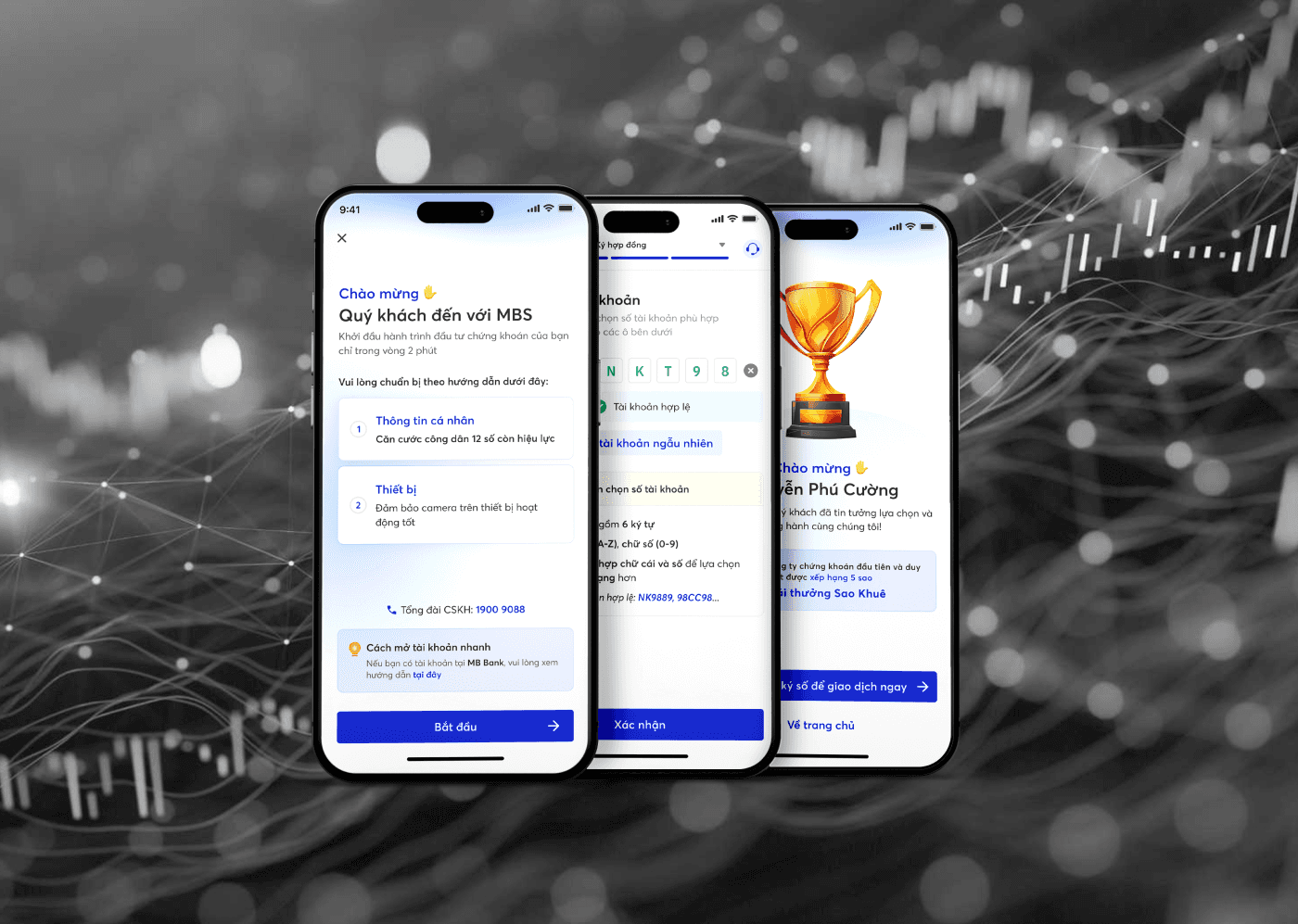
At a Glance
Used funnel data analysis to identify critical drop-off points in the account opening flow — then redesigned the experience to reduce OCR error rate by ~40% while maintaining completion rate across a significantly longer flow.
Company | MB Securities (MBS) — Top 7 brokerage on HoSE, 5% market share (2023), member of MB Group |
Business Goal | Grow digital customer base to support a 7.5% market share target — on par with VNDirect |
Stakes | Digital channel was designated the primary growth driver; eKYC success rate had declined to the mid-30s% range — well below the internal 70% target |
My Role | UX/UI Designer — owned competitive research (VPS), conducted 100+ user interviews, proposed technical solutions, and designed key screens end-to-end |
Team | 4 people: 1 CX Lead, 1 Secretary, 3 UX/UI Designers (work divided equally across designers) |
Timeline | Aug – Oct 2024 (Phase 1 Go-live: 22 Oct 2024 / Phase 2: Q1 2025) |
Outcome | eKYC success rate increased by ~2× / Monthly accounts created: 2–3× increase |
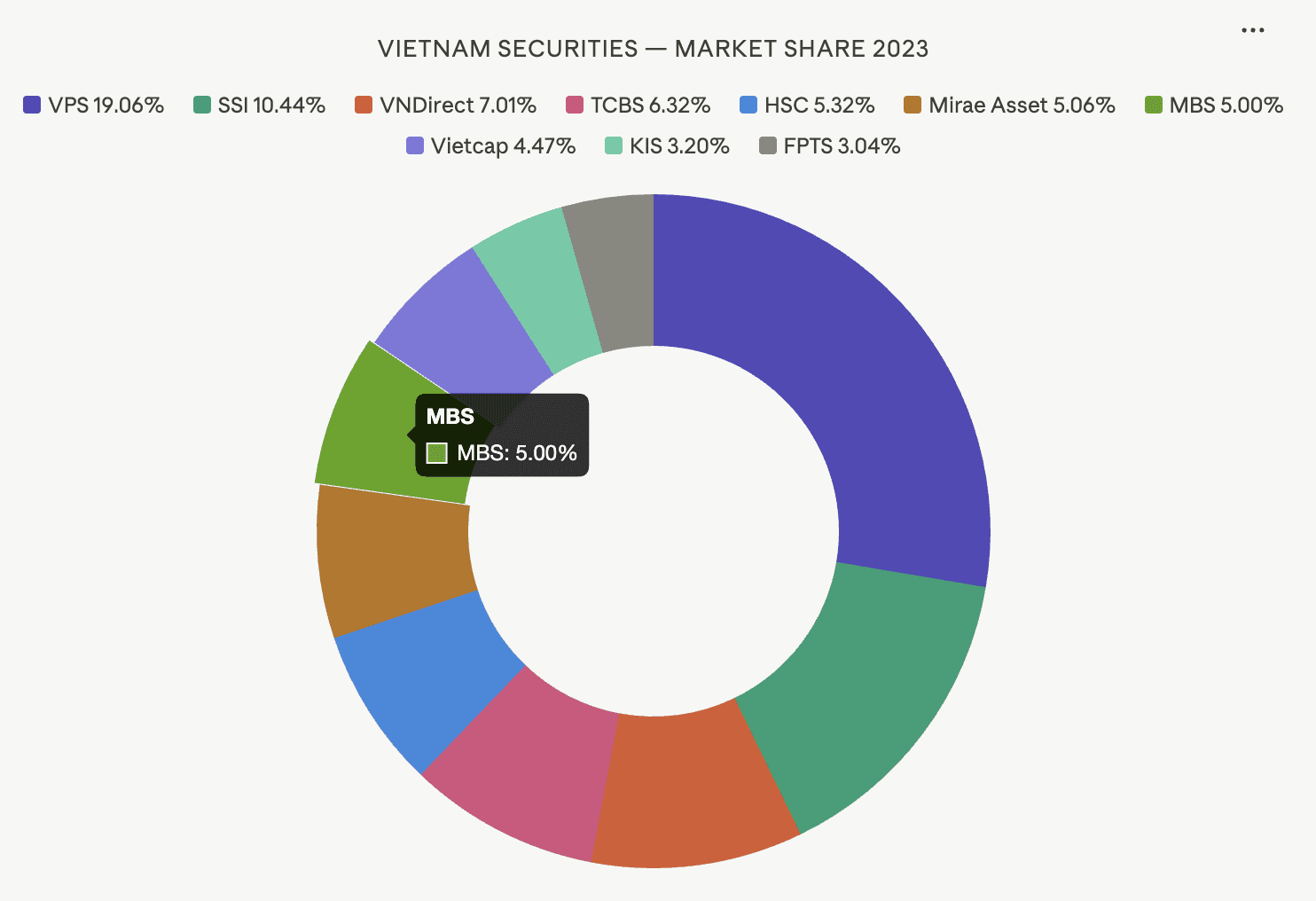
MB Securities Joint Stock Company (MBS) is a member securities firm of the MB Group, with over 20 years of operation in the market. In 2023, MBS ranked 7th on HoSE with a 5.00% brokerage market share. Holding the 7th position, the management board has set a target to expand its market share to 7.5% in 2024 — on par with VNDirect — and designated digital channels as the primary growth driver.
My Role
Activity | What I Did Specifically |
Funnel & Data Analysis | Read and interpreted internal tracking data; synthesized monthly drop-off reports per step |
Competitive Research | Personally downloaded and tested the VPS app end-to-end; mapped full flow, screen count, time-to-complete, and UX patterns |
User Interviews | Conducted 100+ phone interviews with real users who dropped off; recorded and synthesized insights |
Technical Proposals | Proposed switching the Face Matching vendor after analyzing fail rate patterns; proposed SMS OTP auto-read so users don't need to manually copy the code |
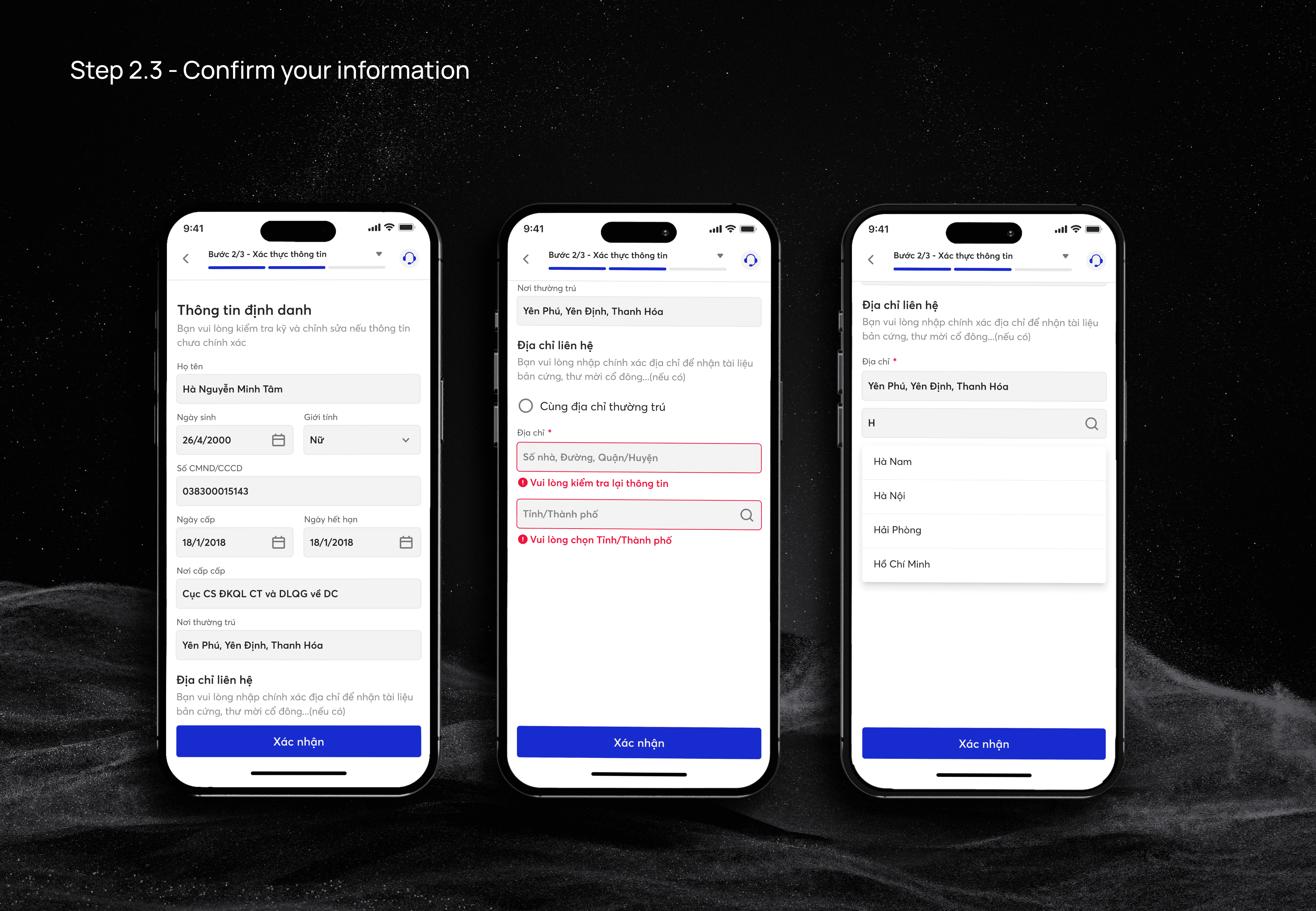
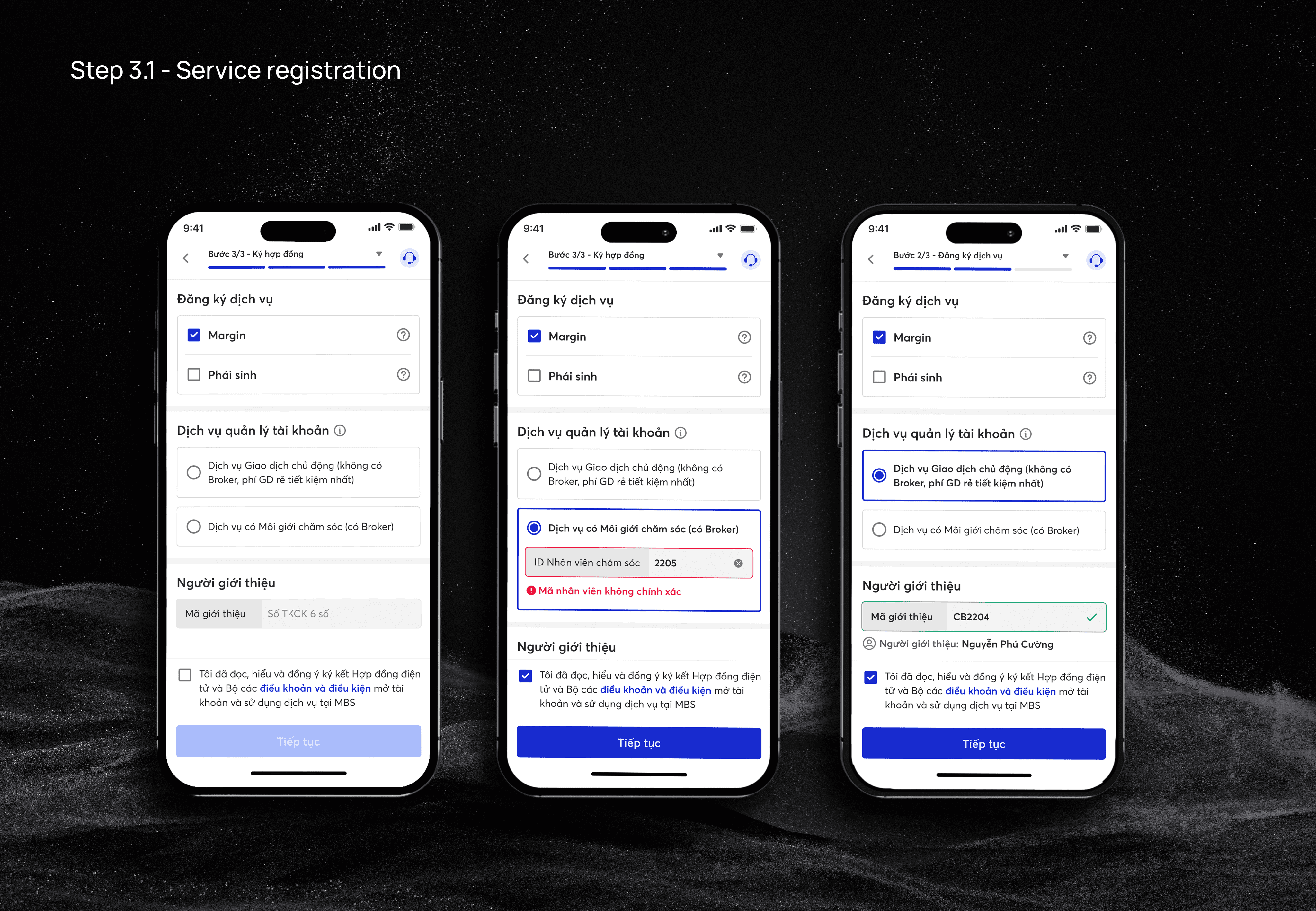
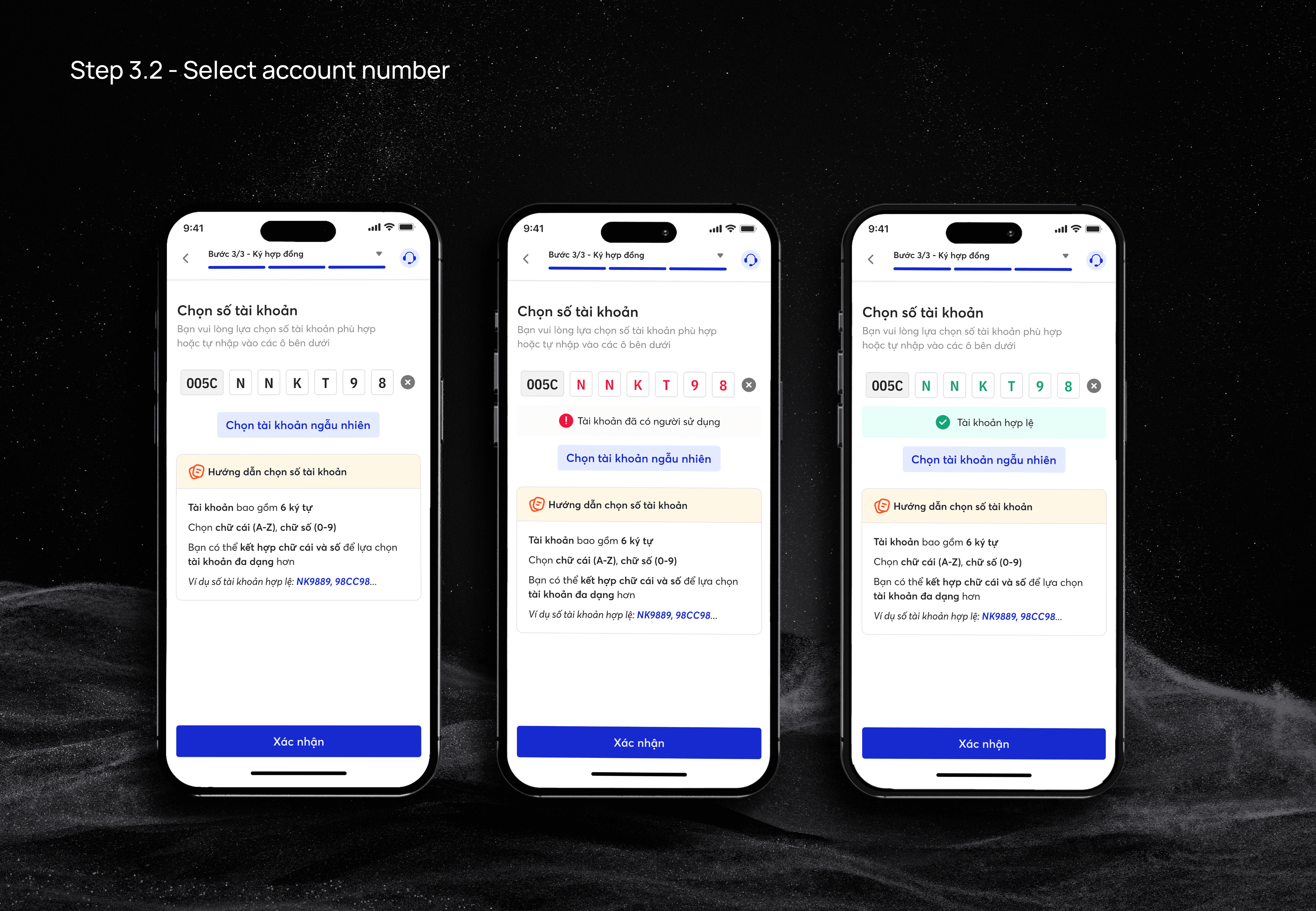
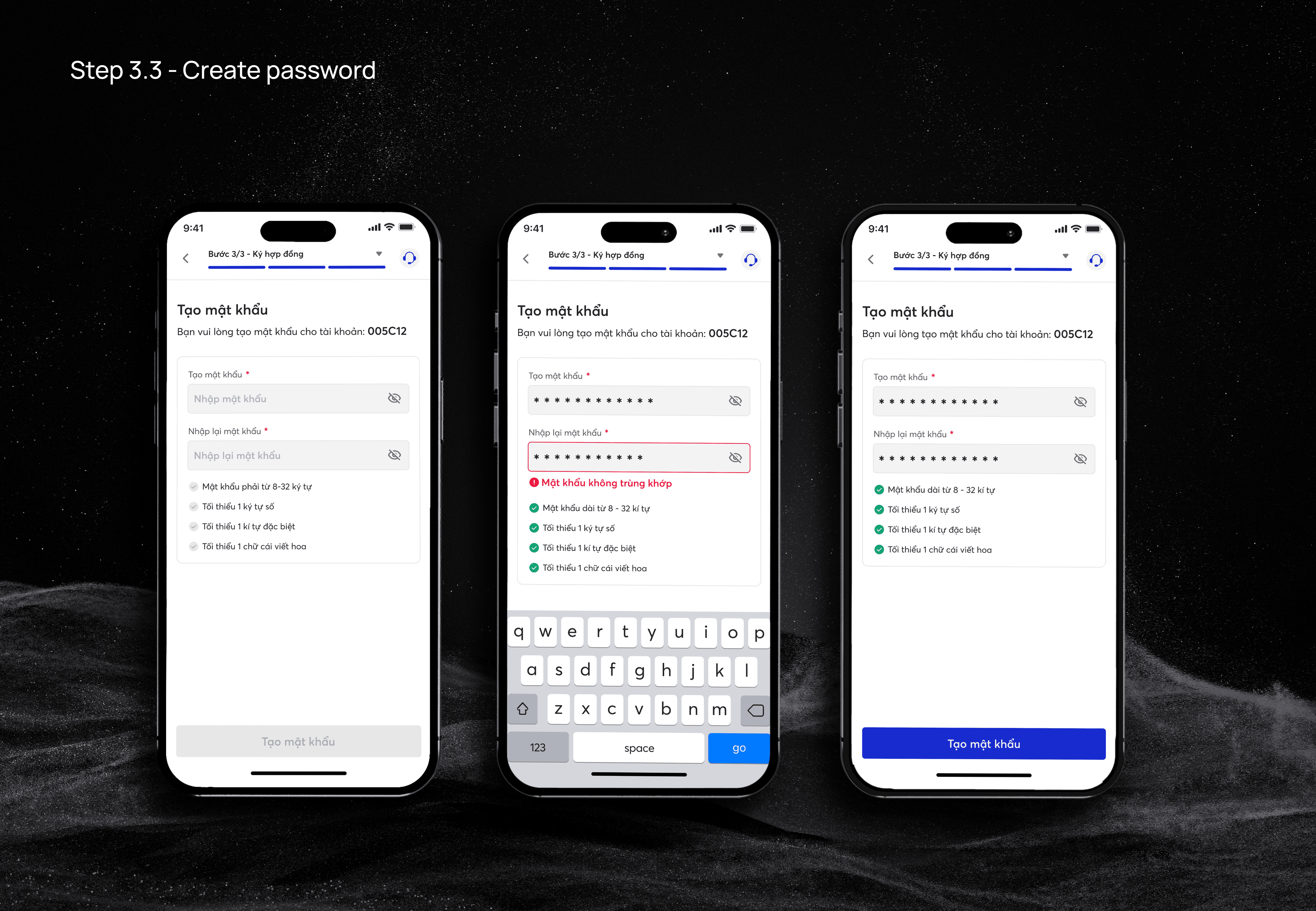
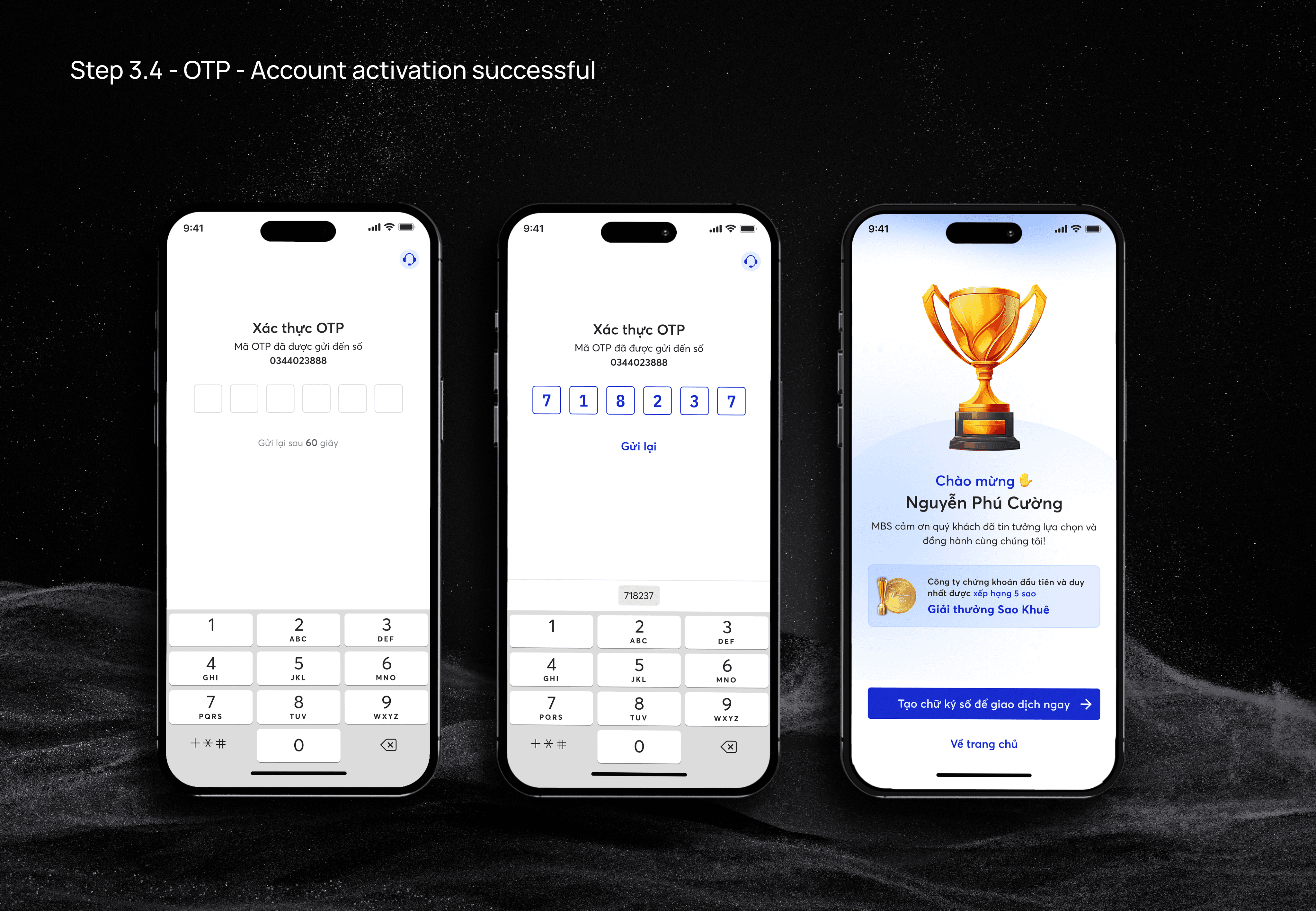
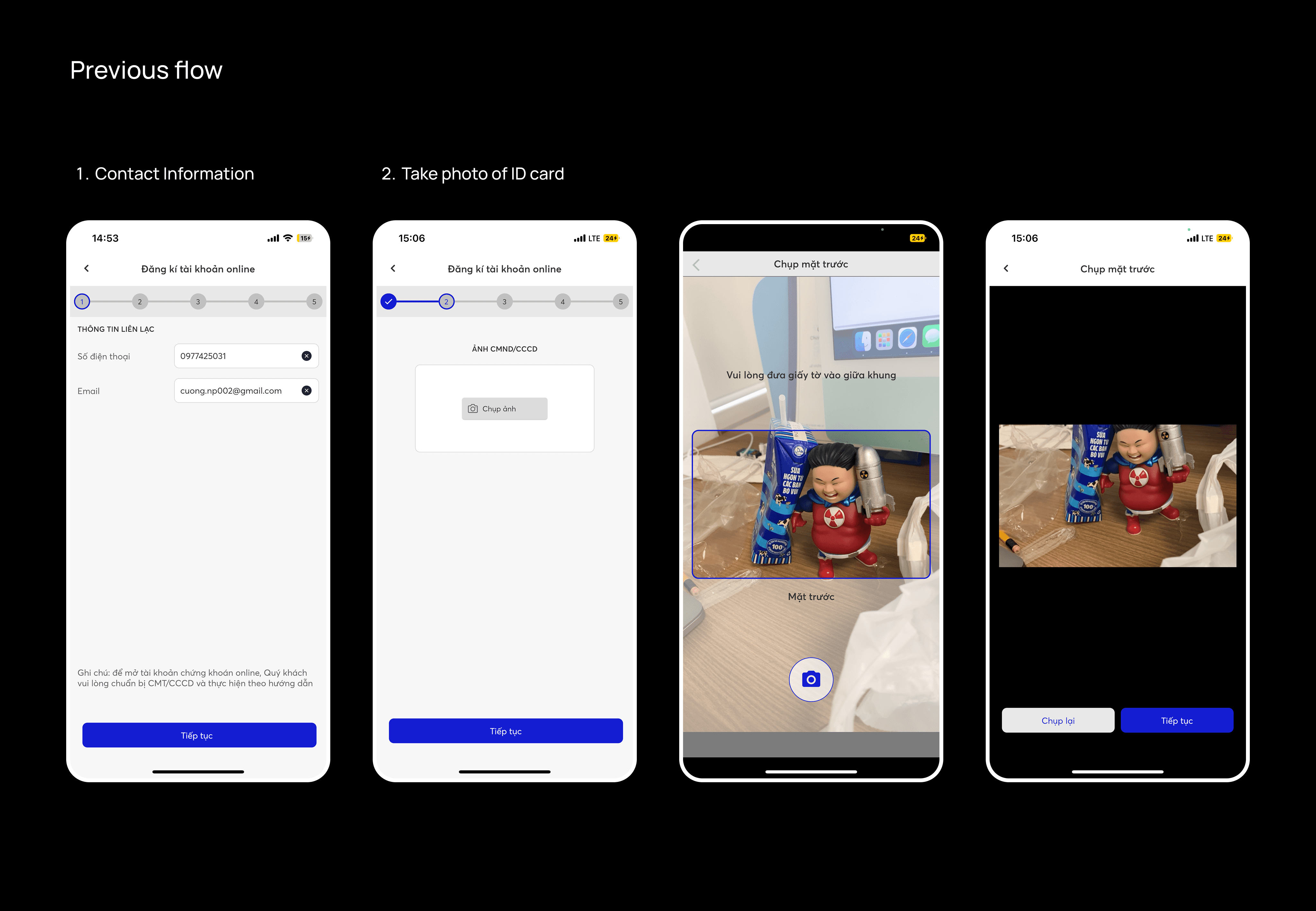
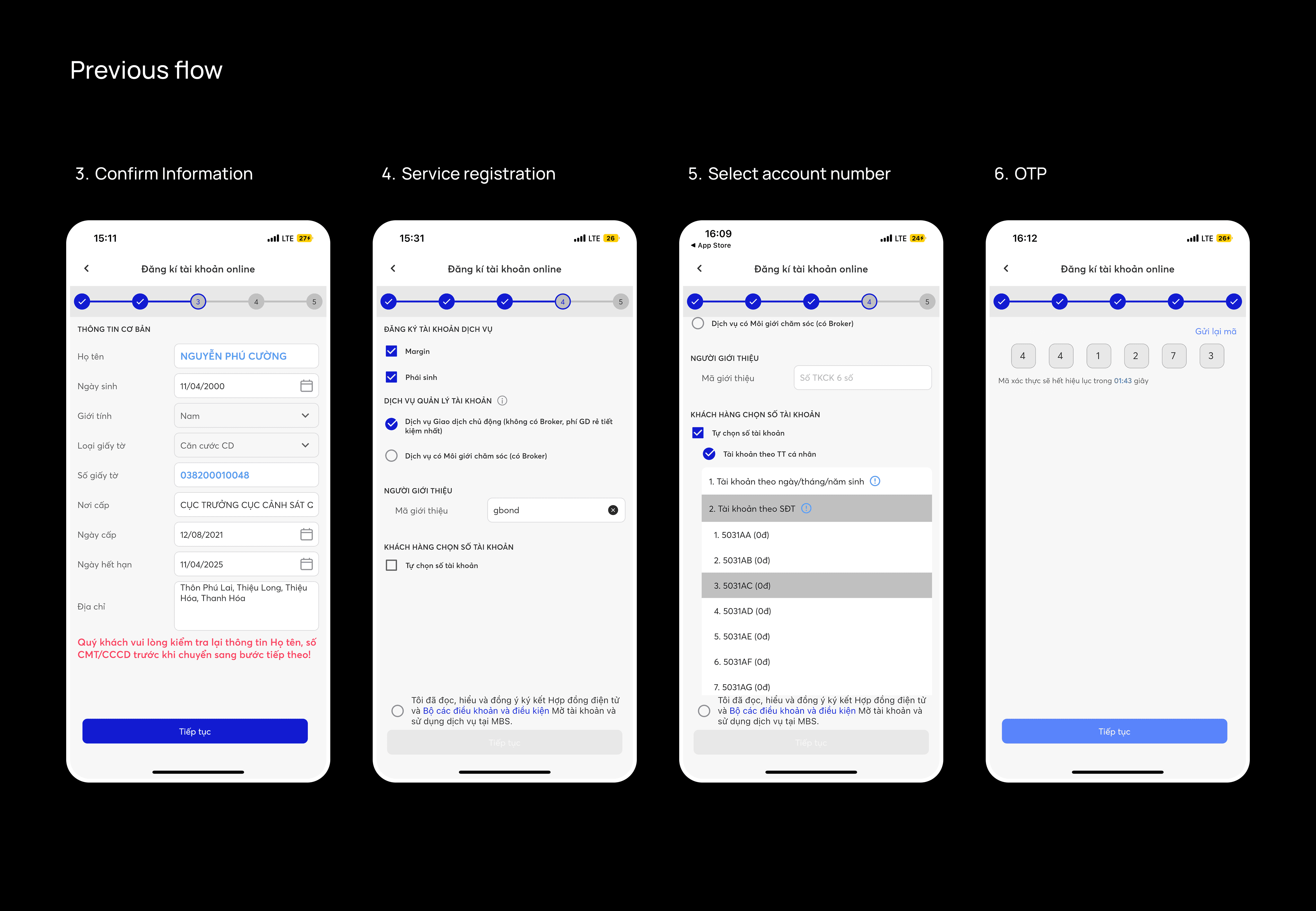
Screen Design | Designed account number selection, service registration, post-ID-scan info entry & confirmation screens; proposed splitting the ID photo capture into two separate steps to properly save front and back independently |
Problems
Flow Step | Drop / Fail Rate | Root Cause | Business Impact |
OCR Instruction Screen | High drop (20%+ range) | Cognitive friction — users read instructions then quit before even attempting; not a technical failure | Large share of motivated users lost before the funnel's most critical step |
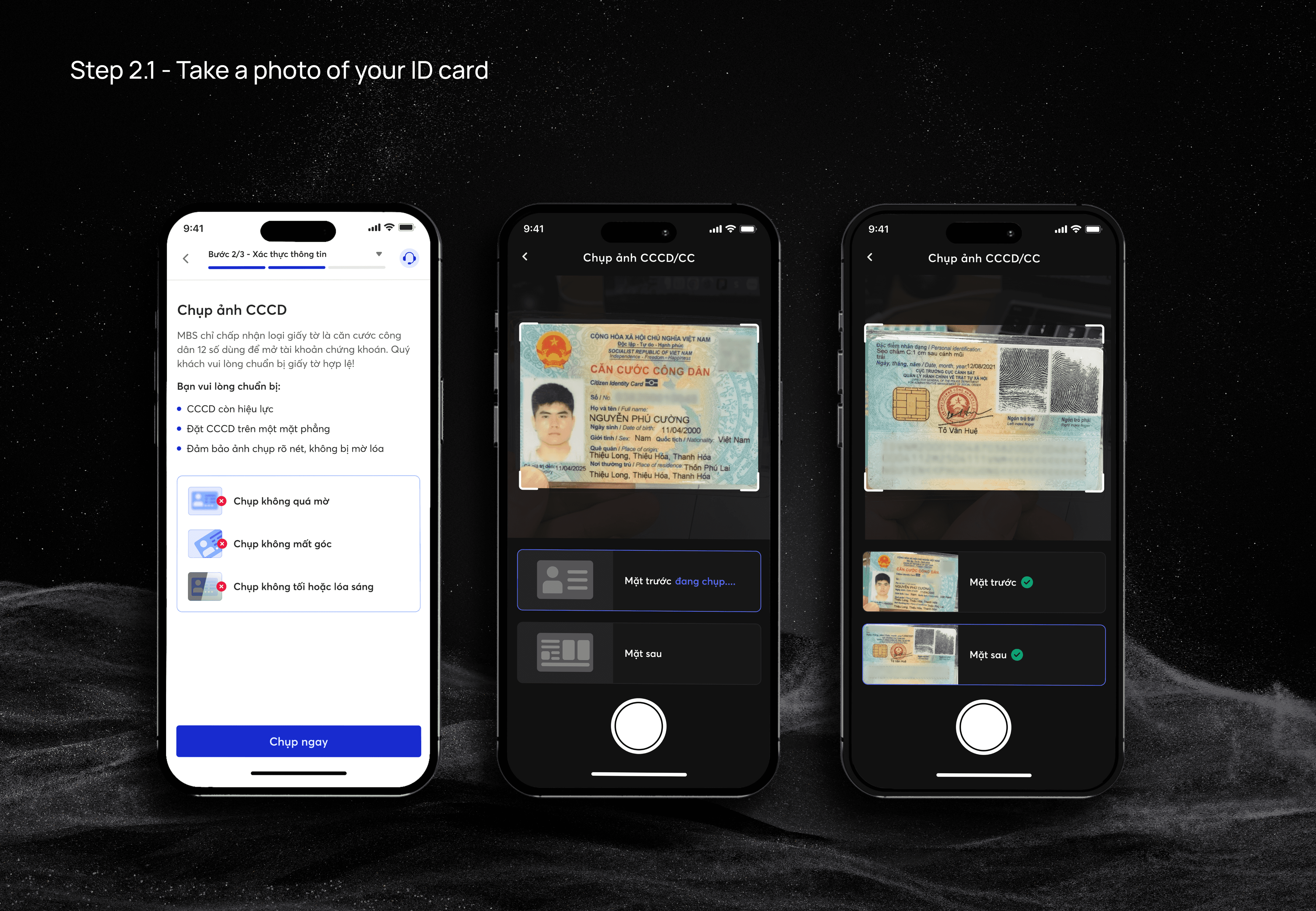
CCCD Photo Capture | ~10% fail range | No real-time guidance on lighting/angle; generic error messages gave users no actionable next step | Qualified users with genuine intent blocked by a fixable UX gap |
Confirm Basic Info | Significant volume rejected monthly | Existing customers detected too late — after completing OCR and all prior steps | 6,000 users/month wasted their entire session; direct loss of qualified returning leads |
SMS OTP | ~5–7% consistent fail | No auto-read SMS; no call fallback; resend button hard to find; phone number errors not caught early | Completion failures at the final stretch — users who cleared the hardest steps dropped at the last mile |
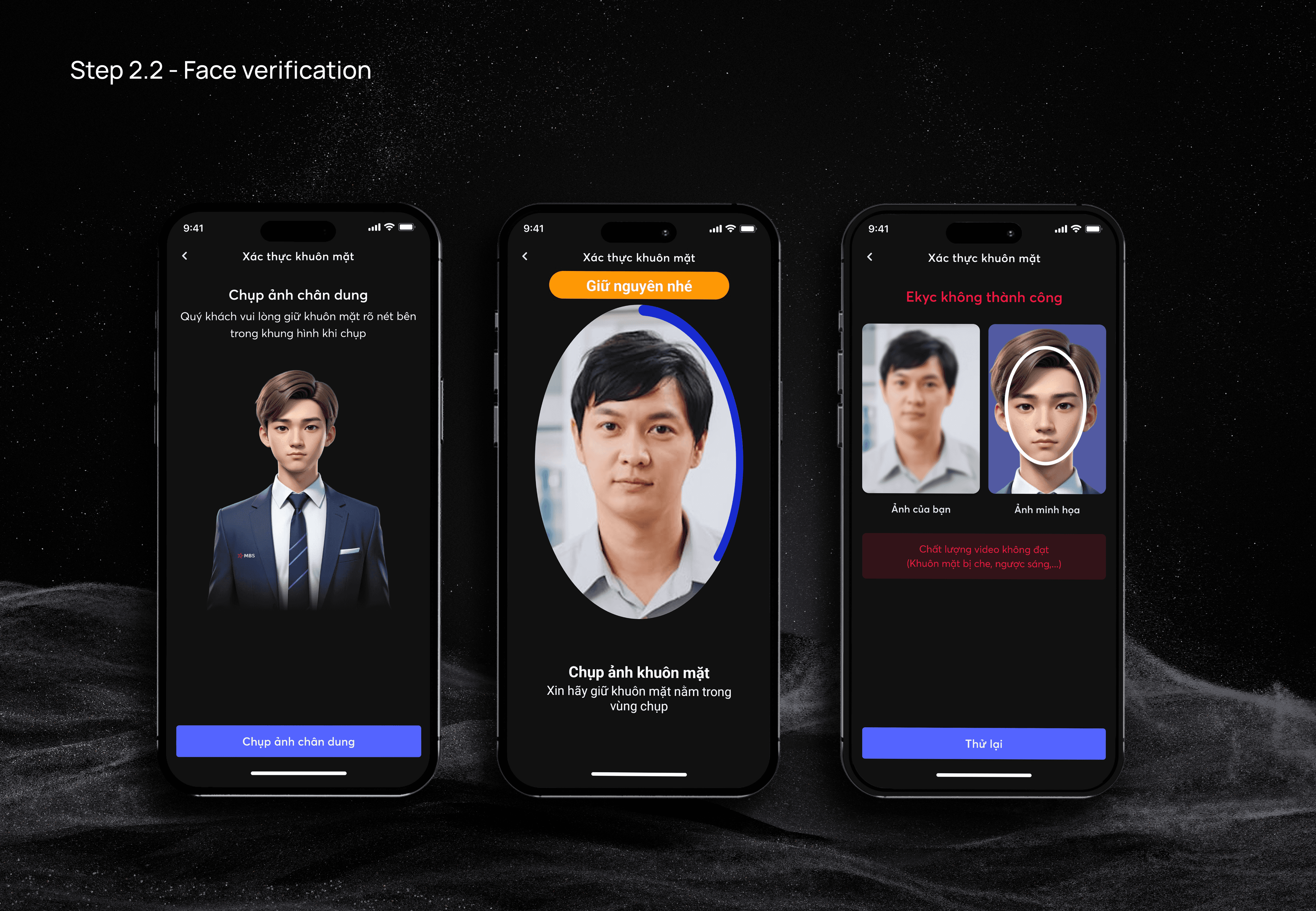
Face Matching | Low but persistent fail | Outdated vendor model rejected correct faces | Eroded user trust at the very last step; damaged perception of product reliability |
Key insight from research: The largest drop-off at OCR was not a UX problem — the majority of users who quit had no genuine intent to open an account. This meant the acquisition funnel was pulling the wrong audience, and UX fixes alone could not resolve everything. Research helped the team separate intent-based drop-off from experience-based drop-off — and prioritize solutions accordingly.
Methods
Mixed-method approach — quantitative data + qualitative interviews + competitive benchmarking:
Funnel data analysis — Tracked and interpreted drop-off across 6 months; identified that overall completion rate had trended down significantly; flagged which steps were deteriorating fastest
Phone interviews (100+ calls, personal) — Called users who dropped at OCR and Service Registration; my focus was classifying whether drop-off came from lack of intent or product friction — a distinction that directly shaped solution prioritization
Large-scale funnel survey — Analyzed hundreds of entries over one week to validate pain point severity with statistical weight
Competitive benchmarking (personal) — Personally downloaded, tested, and mapped a leading competitor's full onboarding flow; compared screen count, completion time, error handling, OTP UX, and ID capture pattern
Technical feasibility collaboration — Worked directly with IT to evaluate switching Face Matching vendor and implementing SMS auto-read; proposals were grounded in fail rate data, not assumption
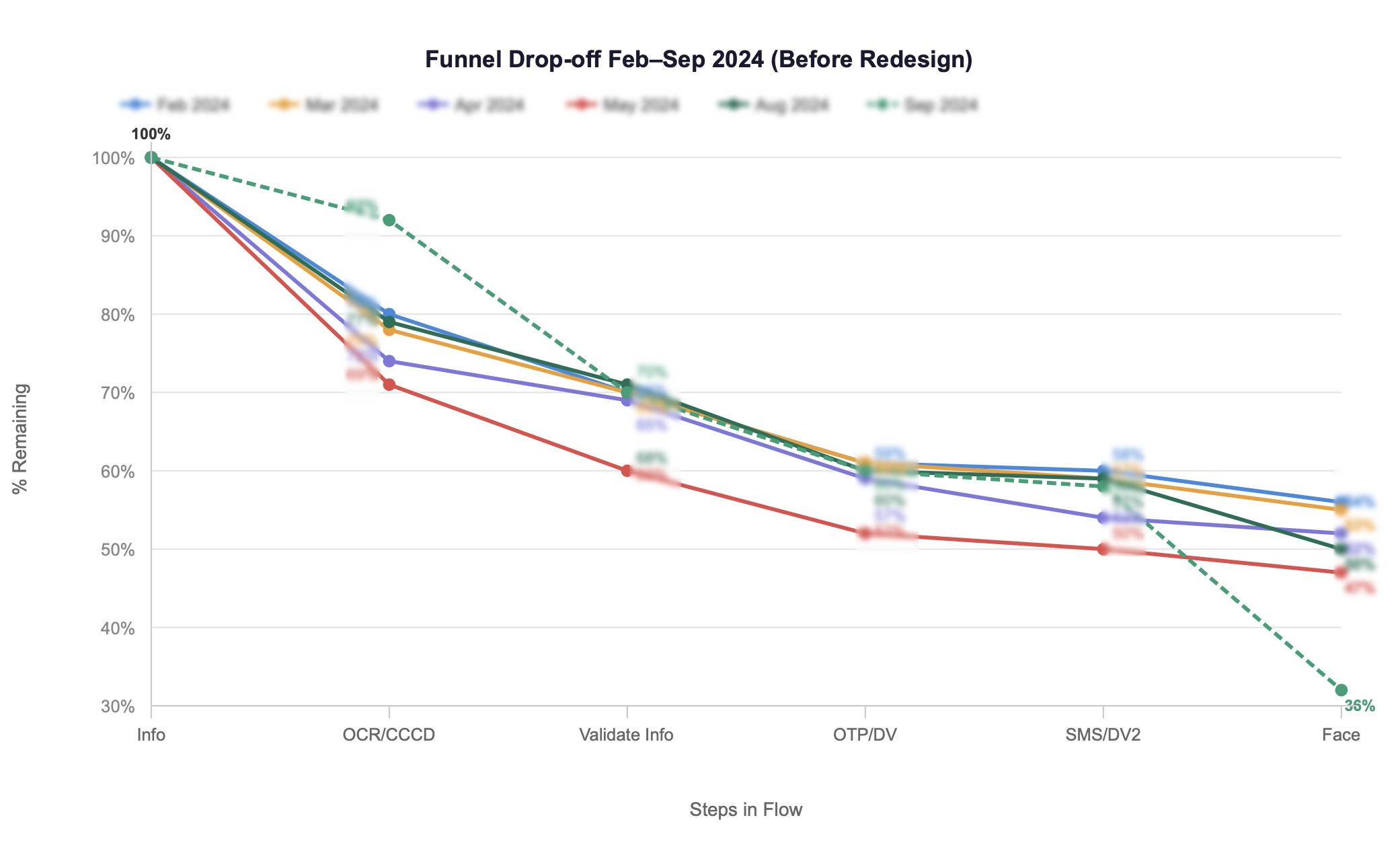

Funnel data from February to September 2024 (pre-redesign) showed a declining and unstable completion trend across the registration flow, reaching its lowest point toward the end of the observation period.
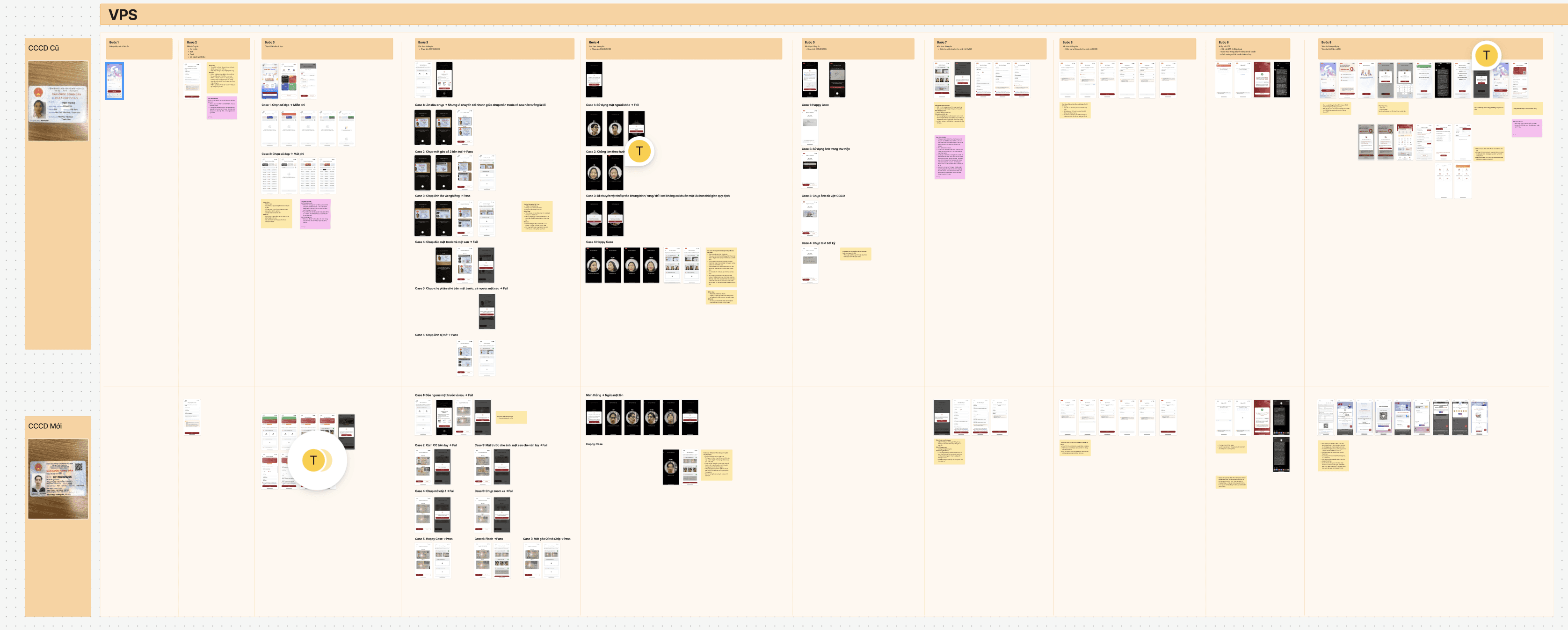
Account Opening Flow of VPS Securities Joint Stock Company (VPS) and In-Flow Use Cases
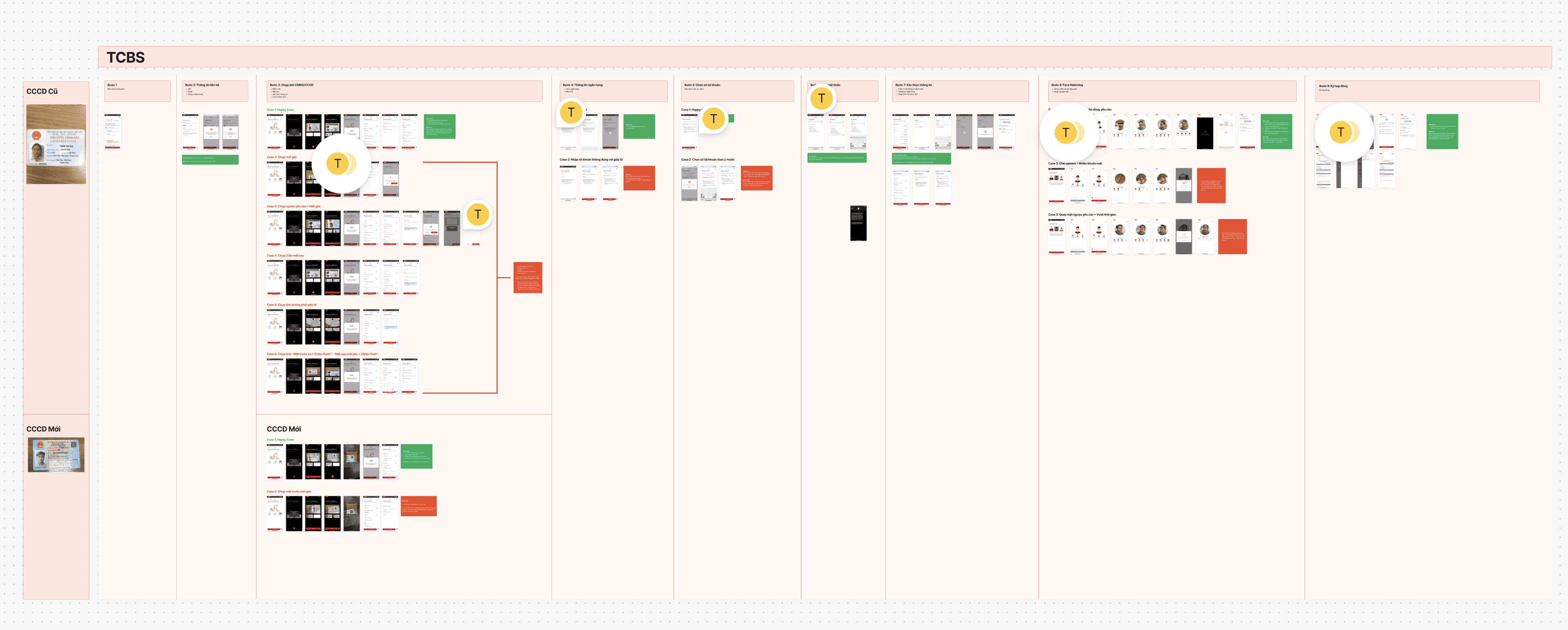
Account Opening Flow of TCB Securities Joint Stock Company (TCBS) and In-Flow Use Cases
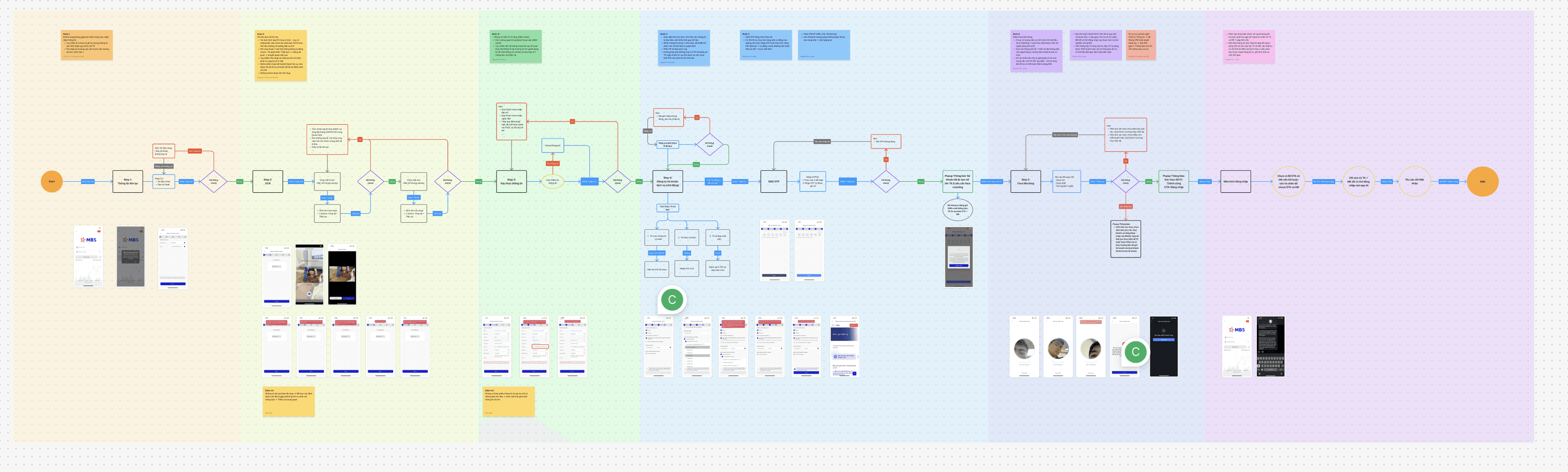
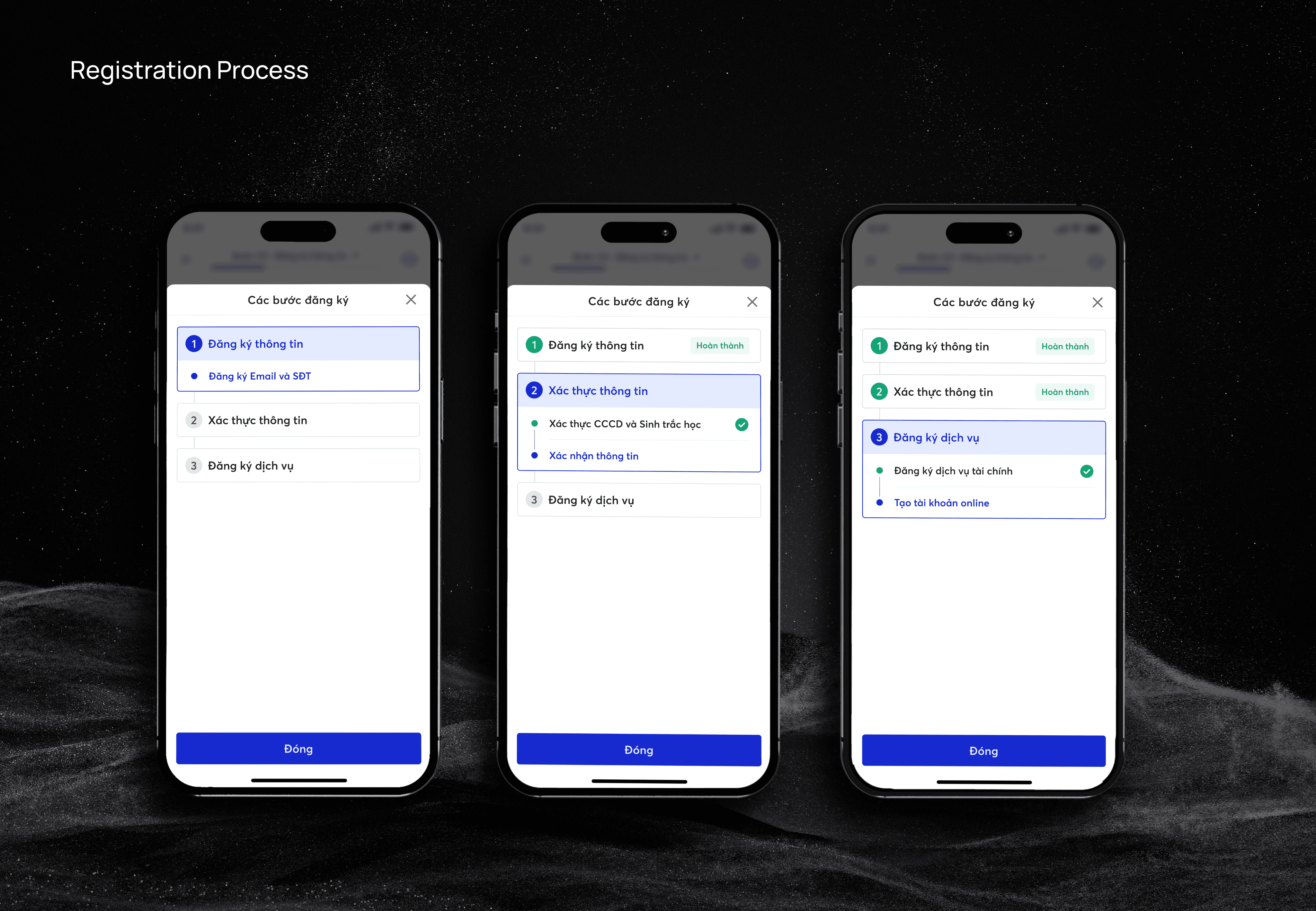
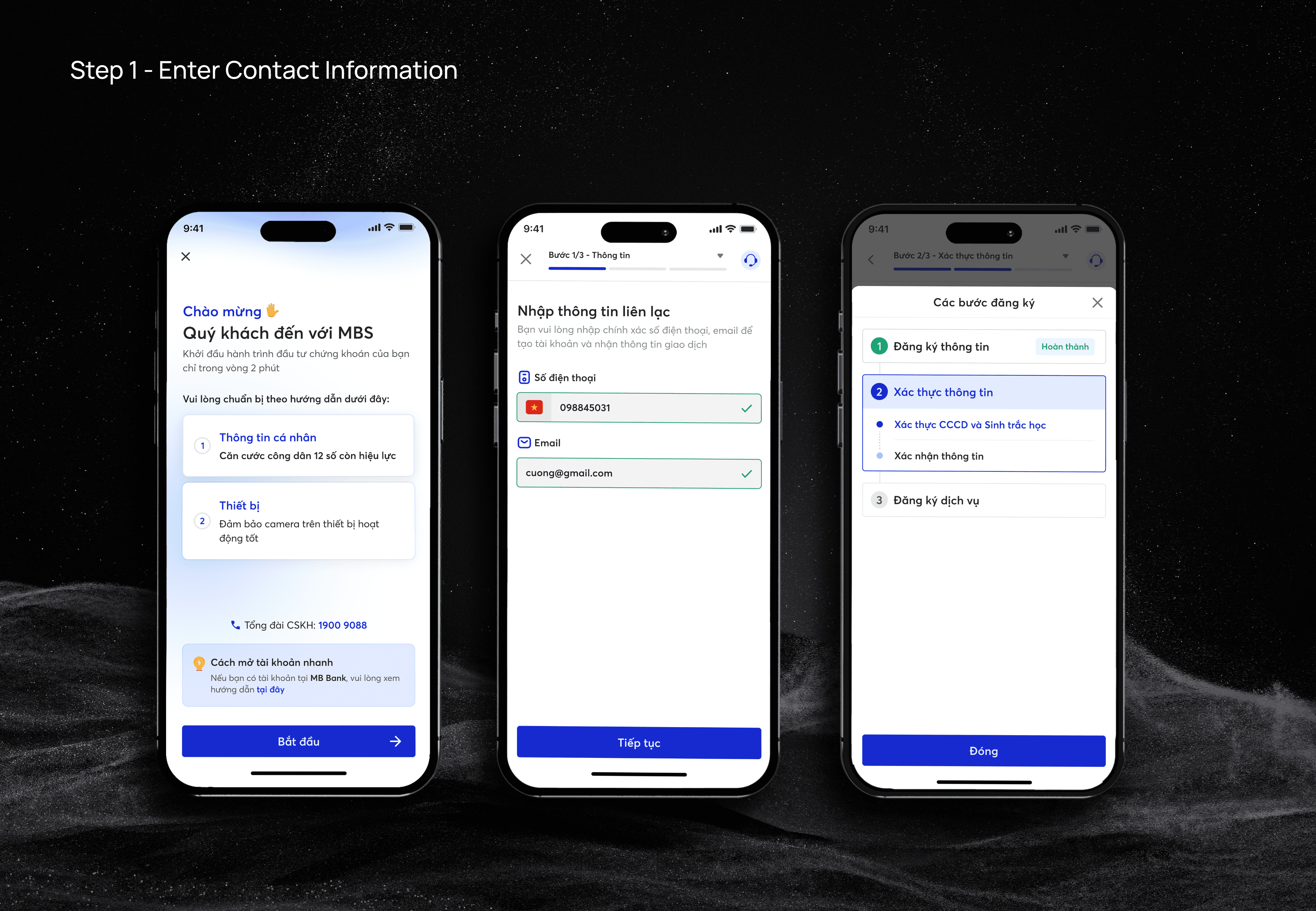
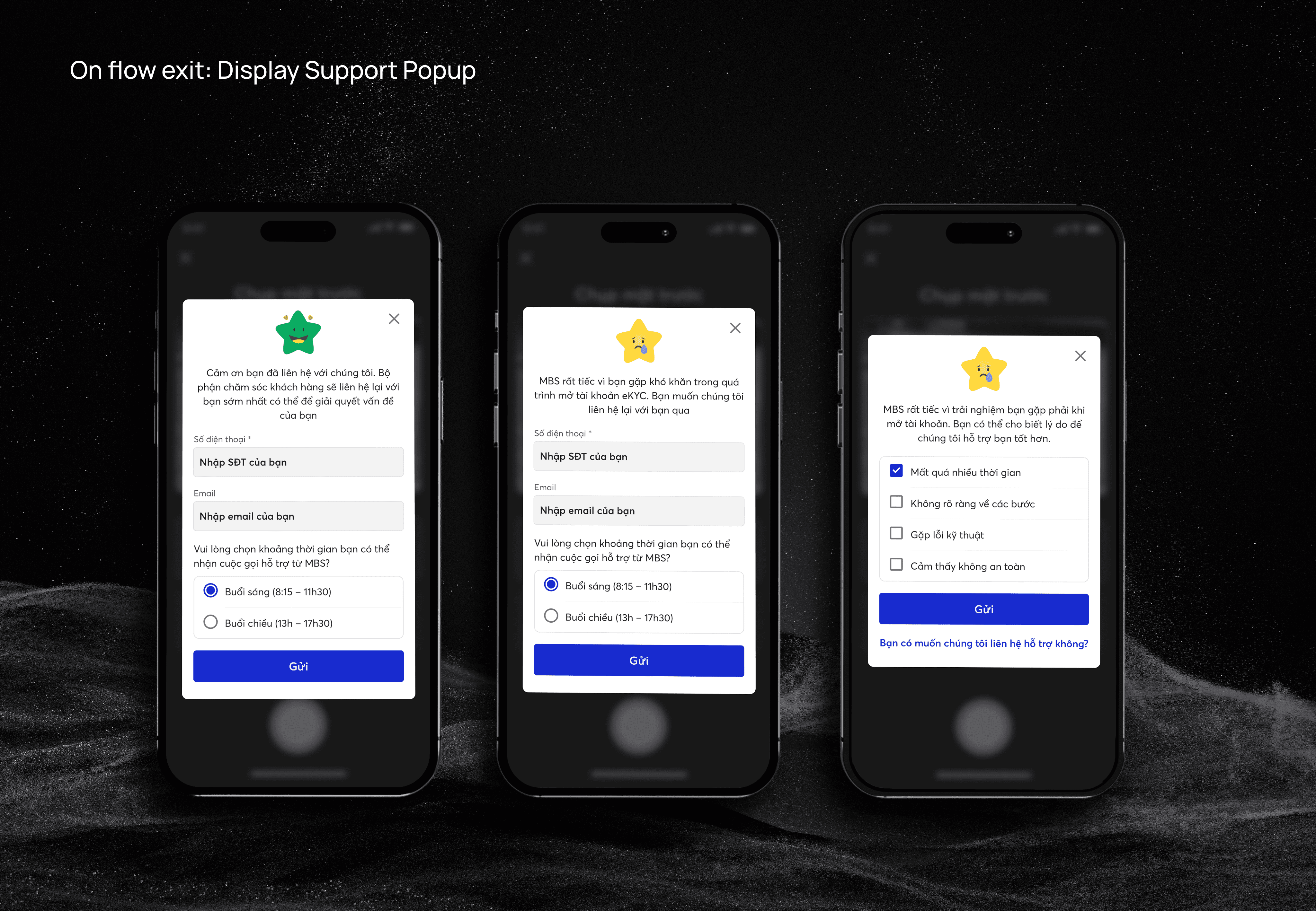
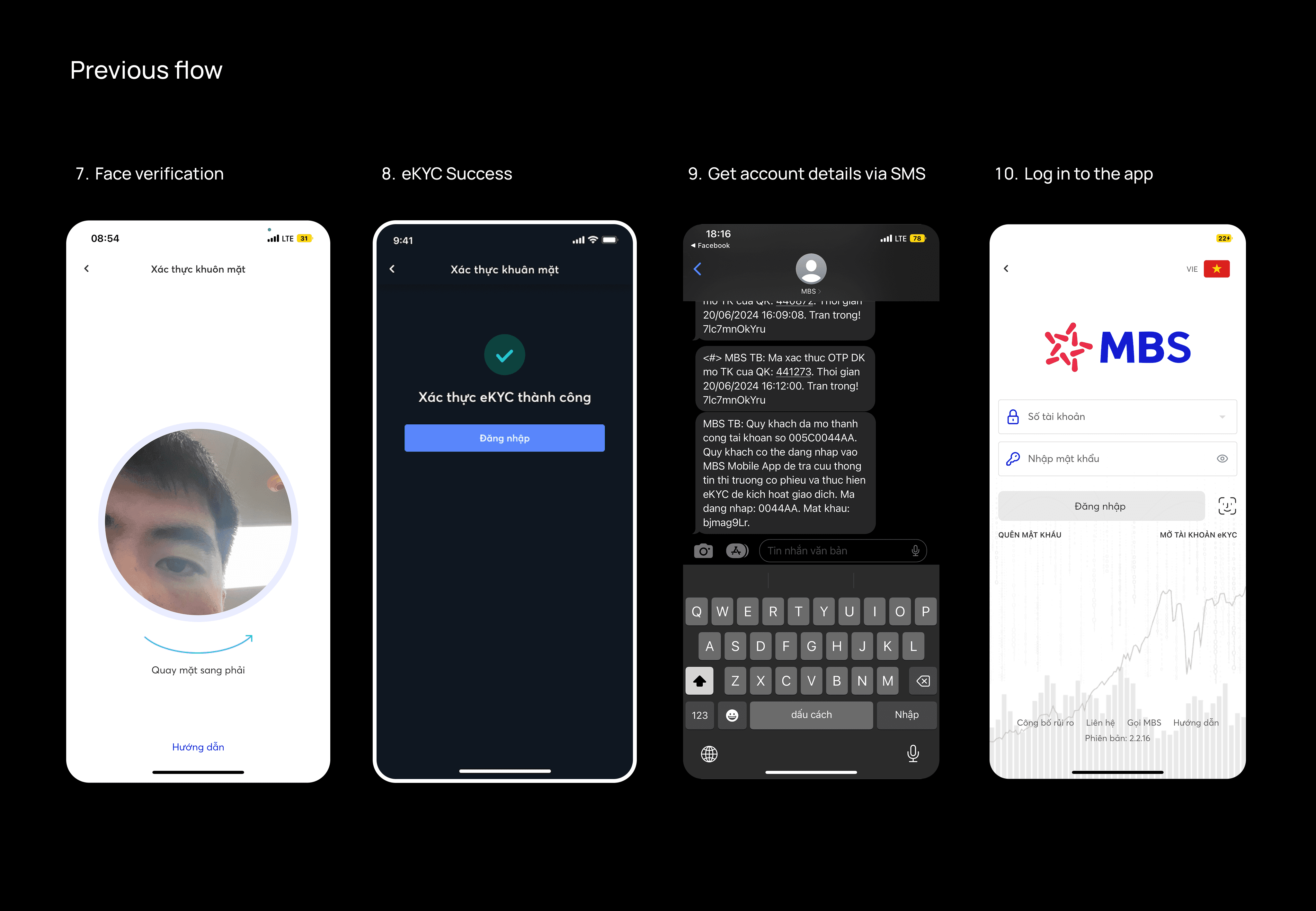
Account Opening Flow of MB Securities Joint Stock Company (MBS) and In-Flow Use Cases
Key Results
Metric | Change |
eKYC success rate | Increased ~2× from baseline (mid-30s% → consistently above 70% target) |
CCCD photo fail rate | Reduced by ~40% |
Existing customers detected late | Reduced by ~99% |
Face Matching fail rate | Improved after vendor switch (Phase 2) |
Monthly accounts created | 2–3× increase |
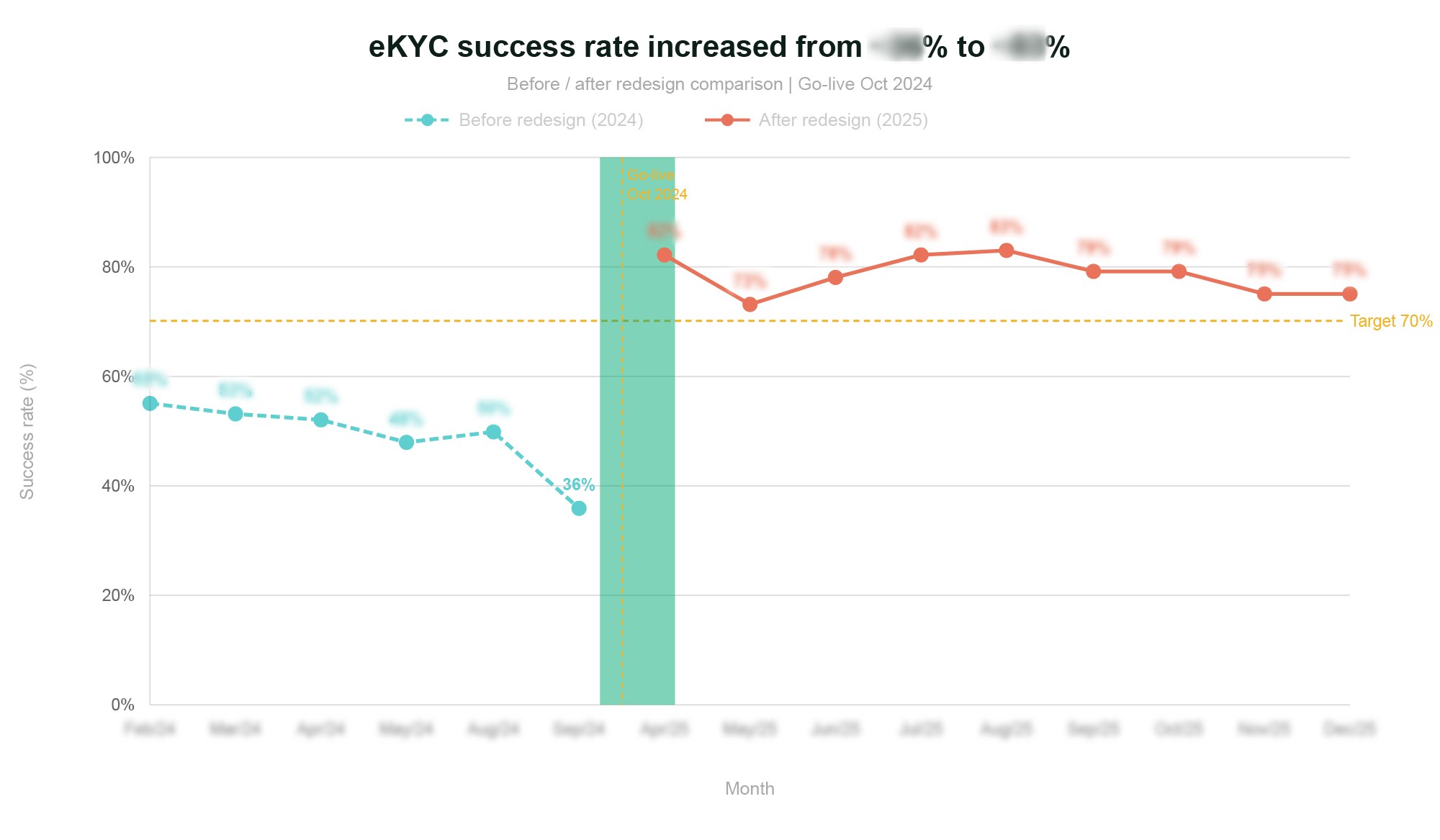
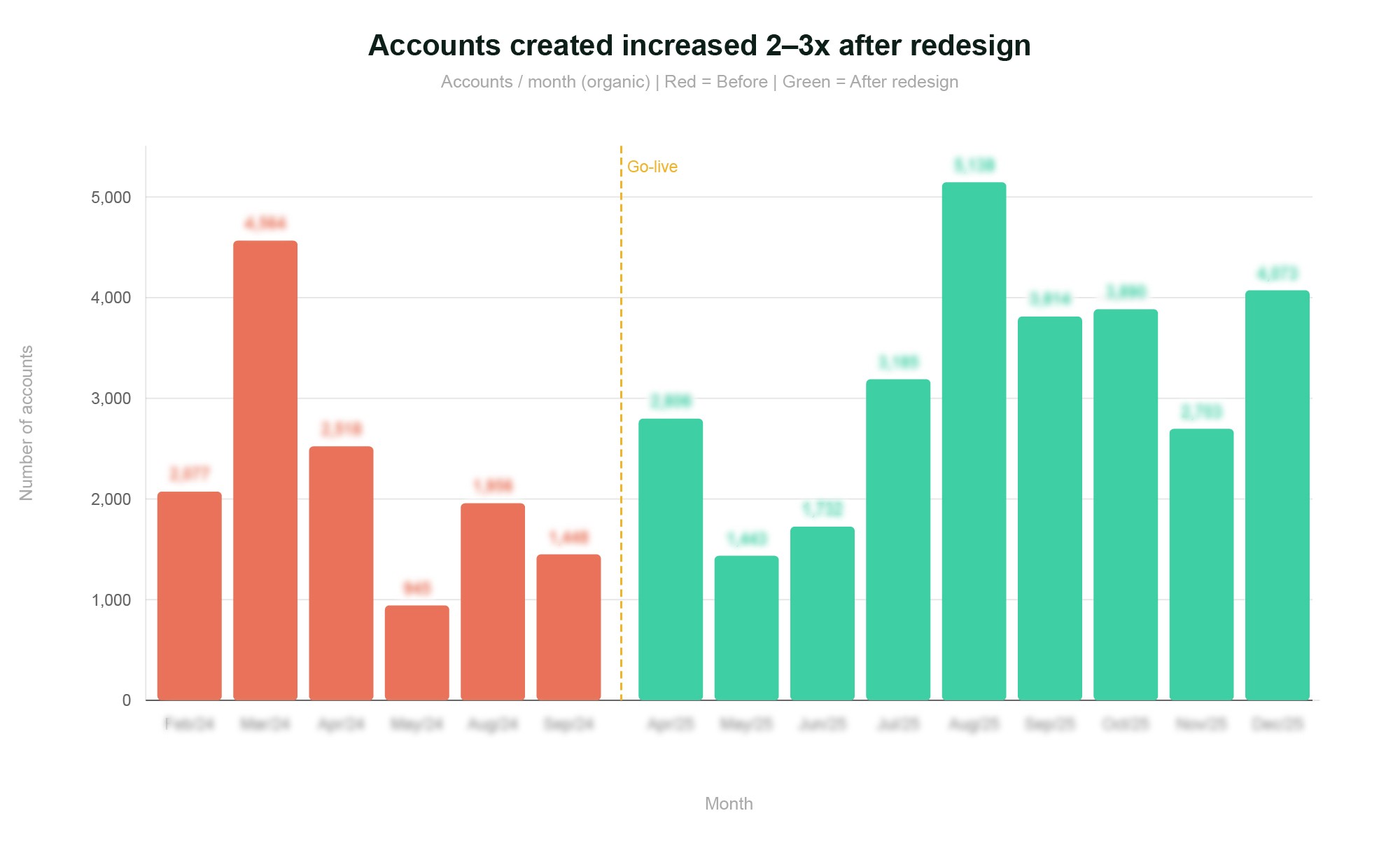
Results sustained consistently across 9 months post-launch, consistently above the original target
Reflection
The redesign delivered results — but the most important learning wasn't about UI craft. It was about how to use data and user research together before reaching for a design solution.
Early in the project, the instinct was to treat every drop-off as a UX problem to fix. But combining funnel data with direct user interviews revealed that a large share of the OCR drop-off came from users who simply had no intention of opening an account — something no interface improvement could address. That distinction changed how we prioritized: technical fixes and flow improvements were focused on users with genuine intent, while the acquisition-layer problem was flagged separately to the business team.
This experience reinforced something I want to carry forward: hypotheses need to be tested against data before solutions are ranked. Observation and pattern recognition matter — but they need to be grounded in numbers to hold up in cross-functional decision-making. Working closely with IT, the CX lead, and directly with leadership also sharpened my ability to communicate design rationale across different professional languages — which I see as just as important as the design work itself.
What the team is still working on:
Detecting duplicate phone numbers earlier in the flow (currently a meaningful volume reaches the rejection point after completing multiple steps)
A fast-track flow for returning users whose eKYC data already exists in the system
Monitoring Face Matching fail rate for a potential Phase 3 vendor upgrade