Pantone Color Study (Klimt Reinterpretation)
Using Pantone color ratios to reinterpret a Klimt composition as a teaching sample for color application
Client
VCA
Industry
Education
Date
2019
Role
Teaching Assistant, Color Analysis & Visual Development
Scope
Pantone color ratio analysis, composition study, artwork reconstruction, recolor development, and teaching sample creation
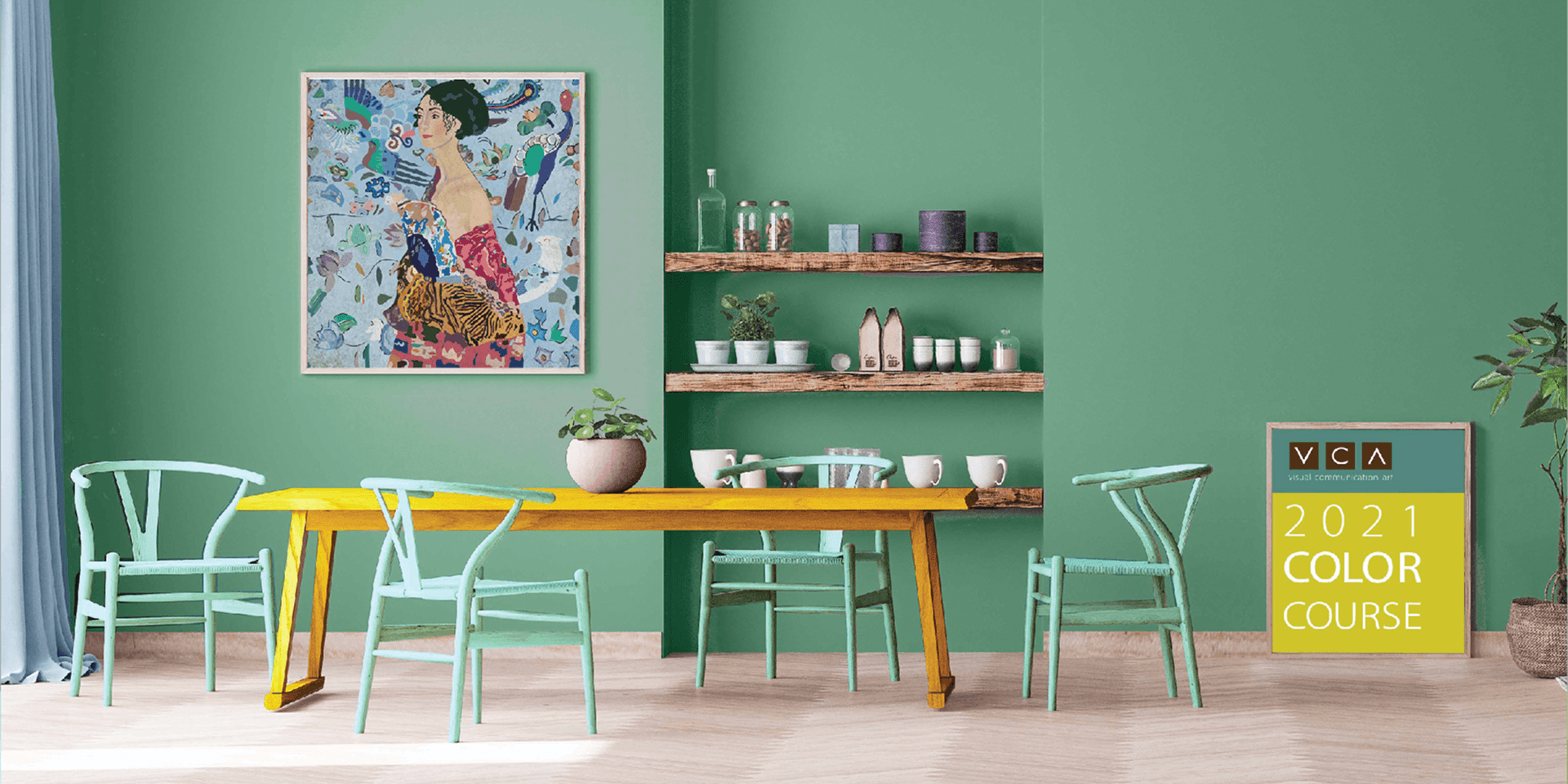
This project was created as a complete teaching sample for a color course, where my role as a teaching assistant was to develop a finished example that could guide students through the process of applying a predefined color ratio to an existing composition.
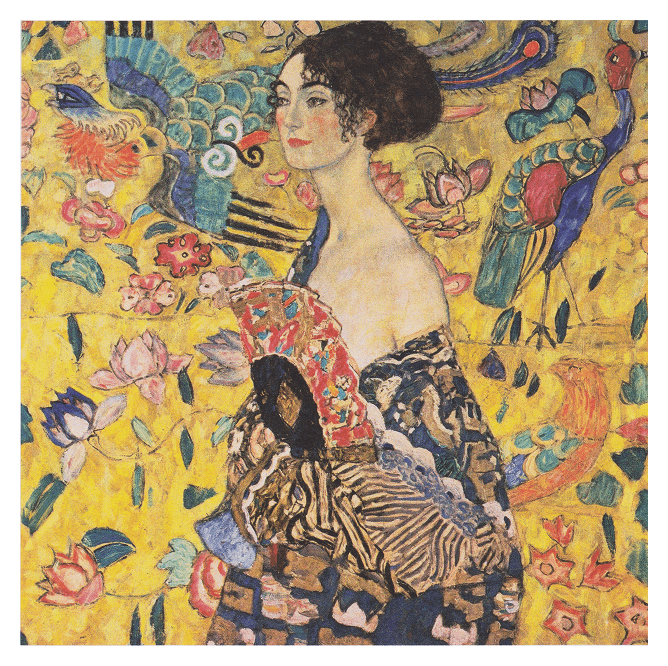
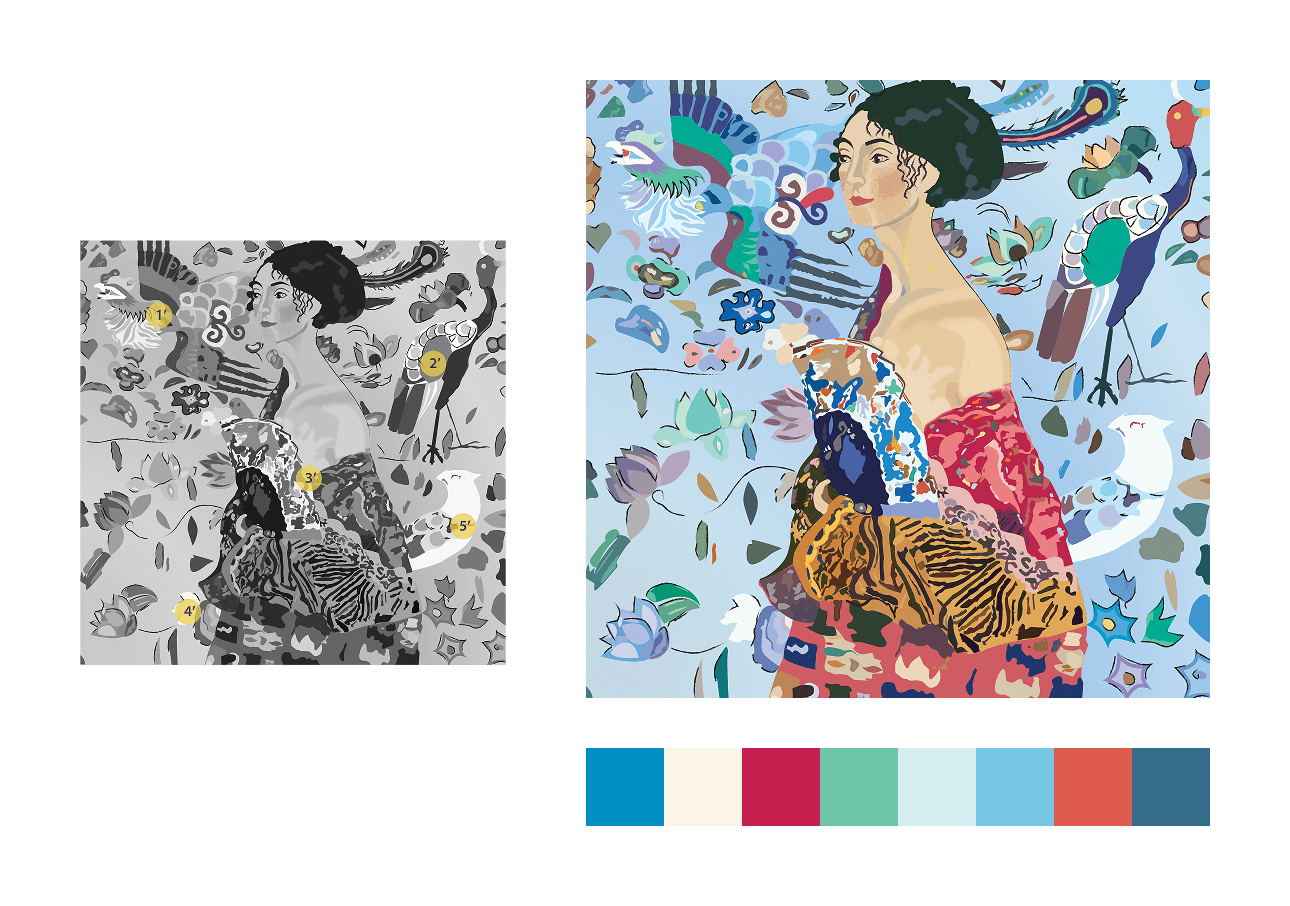
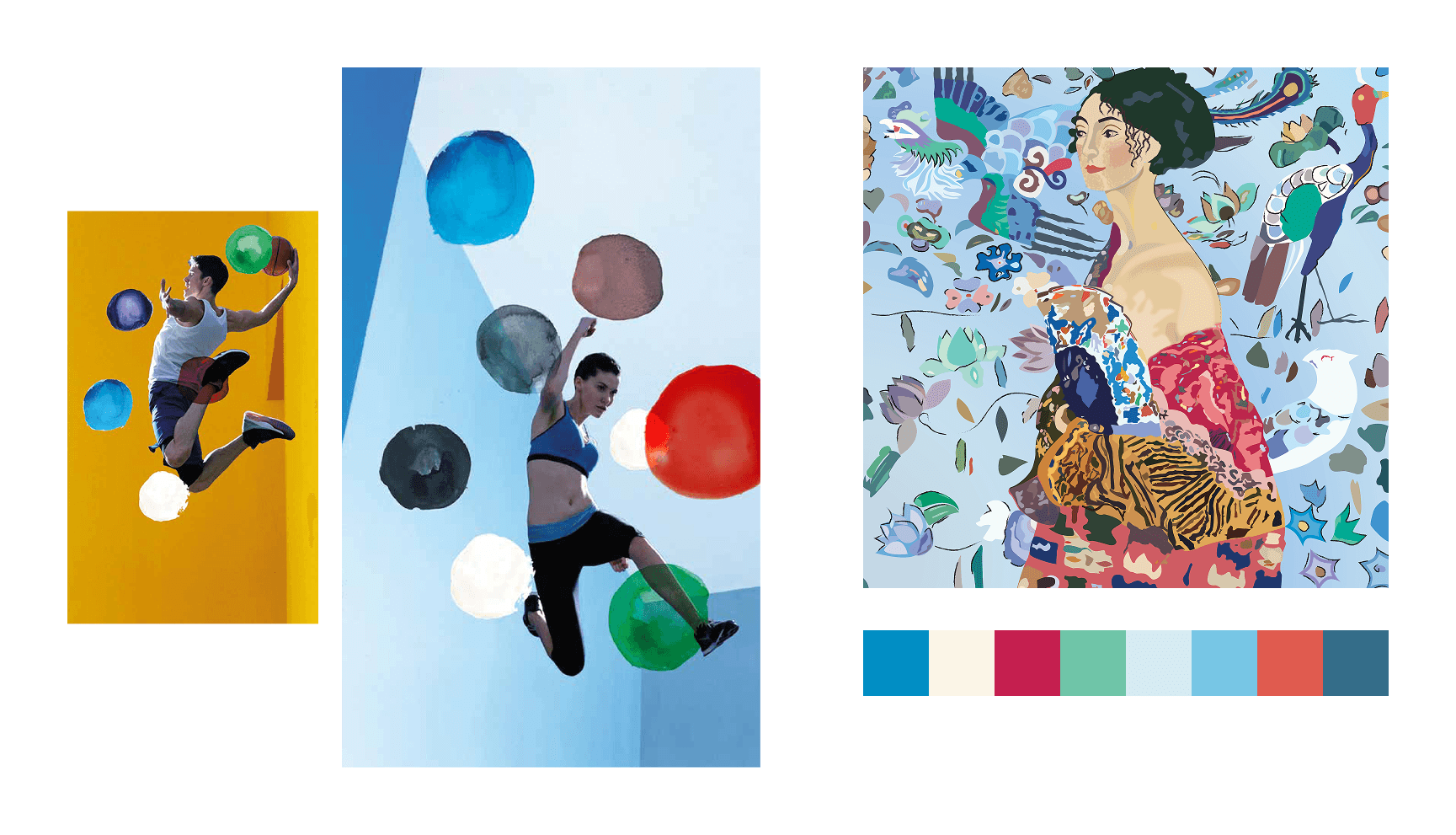
For this exercise, I used a Pantone color palette as the color system and Gustav Klimt’s painting as the compositional foundation. Rather than simply recreating the artwork, the goal was to analyze both the color ratio and the composition structure, then use those insights to build a new visual outcome that demonstrated how color can be systematically applied within a fixed layout.
The main challenge of this project was to turn an abstract lesson about color proportion into a clear and practical visual demonstration.
Students often understand color palettes as isolated swatches, but struggle when asked to apply them meaningfully within a full composition. To make the lesson more useful, I needed to create a sample that showed not only the final outcome, but also the thinking behind it:
how to read a color ratio from a Pantone palette,
how to study the structure of an existing artwork,
and how to translate those two systems into one coherent visual composition.
The challenge was not just technical execution. It was about making the process visible and teachable.
As a teaching assistant for the color course, my responsibility was to create a complete sample exercise that students could follow as a reference.
This included:
selecting and reconstructing the original artwork
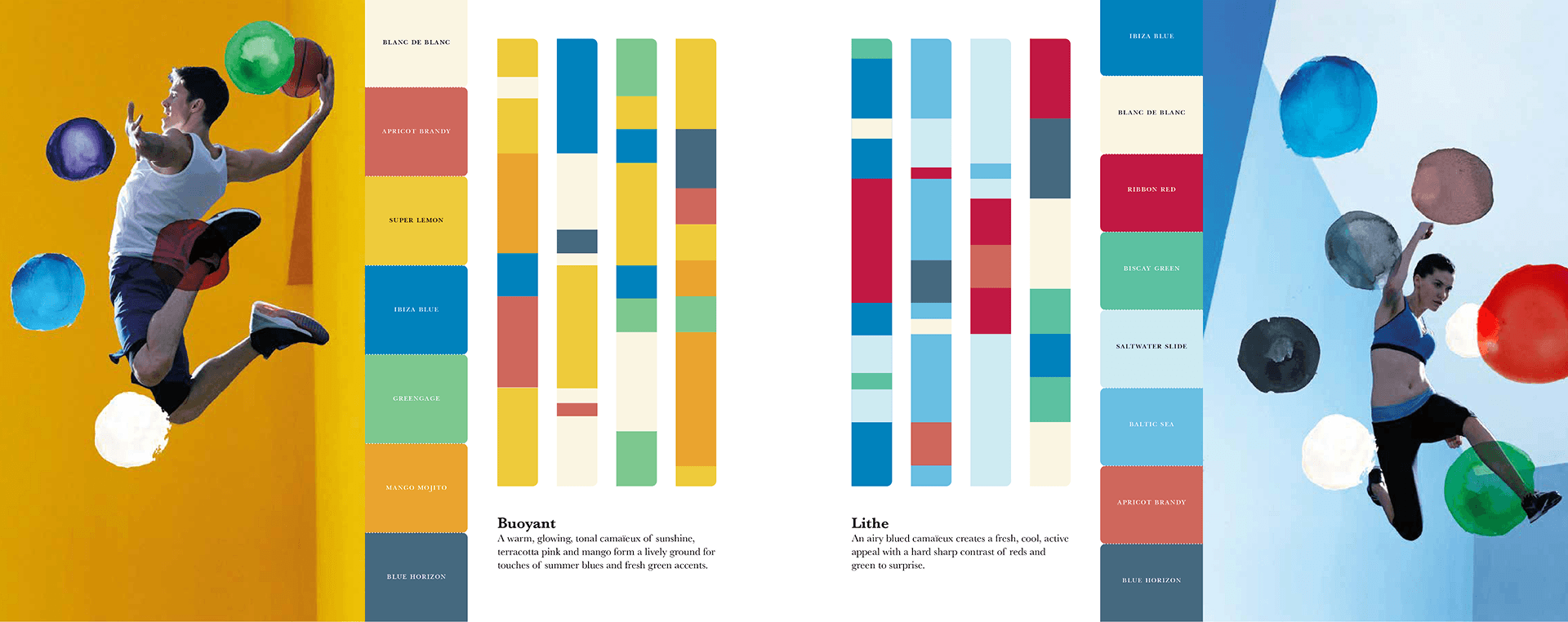
analyzing the Pantone color ratio
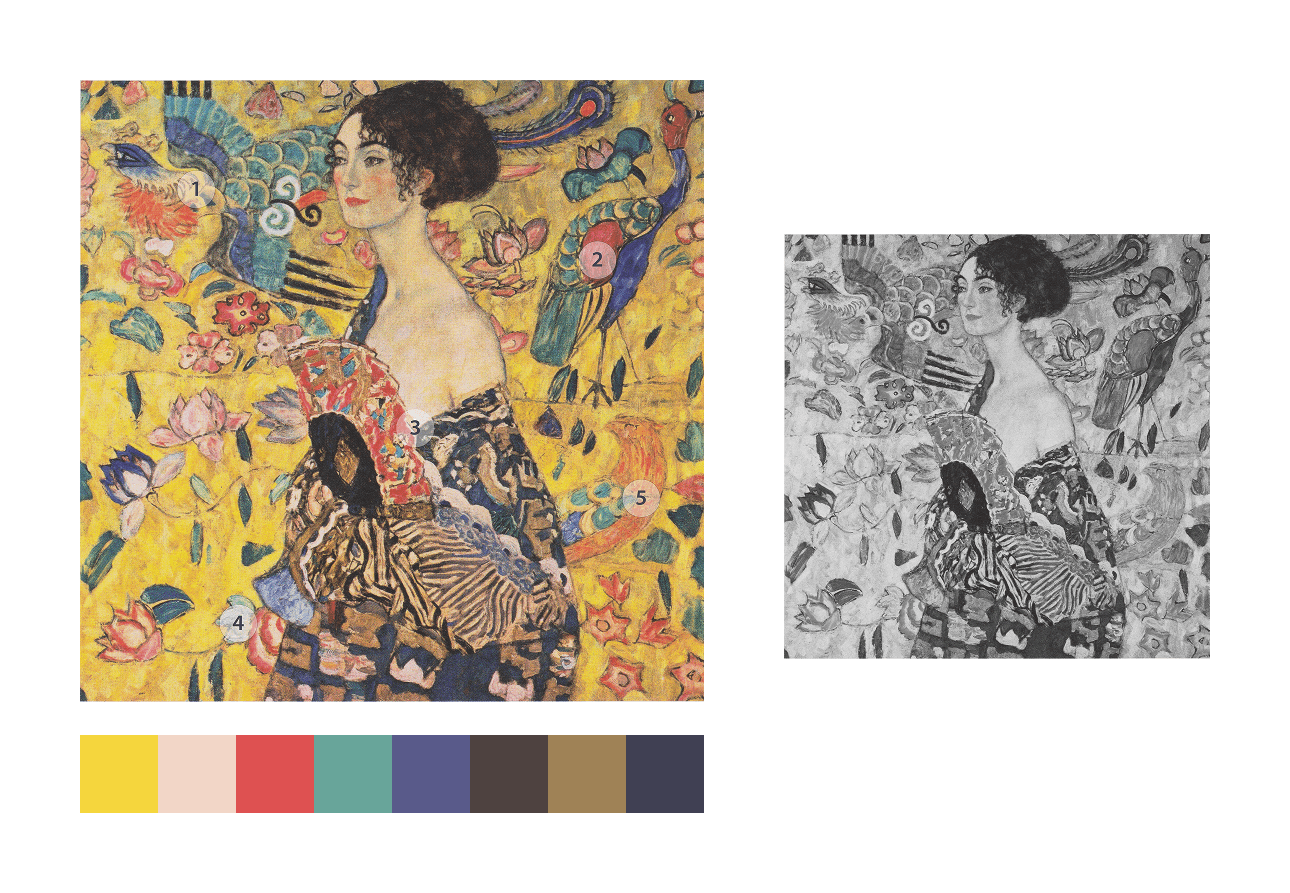
studying the composition of the original painting
identifying how color distribution could be reassigned within the layout
producing a final recolored version that clearly demonstrated the application of the system
1. Studying the Pantone color ratio
The first step was to analyze the selected Pantone palette as a system rather than just a collection of colors.
I looked at:
the dominant and secondary colors
the relative proportion of each color
the visual balance between light, mid-tone, and accent colors
how the palette could create rhythm and hierarchy when applied to an artwork
This step was important because the purpose of the exercise was not to decorate the composition with arbitrary colors, but to apply a structured ratio in a deliberate way.
2. Analyzing the composition of the original artwork
I then studied the composition of Klimt’s painting to understand how the visual elements were arranged.
This included:
identifying major and minor shape areas
observing focal points and directional flow
breaking down the composition into sections that could receive different color weights
understanding how ornament, figure, and background interacted visually
This analysis made it possible to map the Pantone ratio onto the artwork in a more intentional and balanced way.
3. Reconstructing the artwork
To create a usable teaching sample, I redrew the original composition so I could fully control the color application process.
This reconstruction allowed me to:
simplify and organize the artwork into workable visual zones
prepare the piece for structured recoloring
demonstrate how design analysis can support execution
This step was essential because it transformed the project from observation into applied practice.
4. Applying the new color system
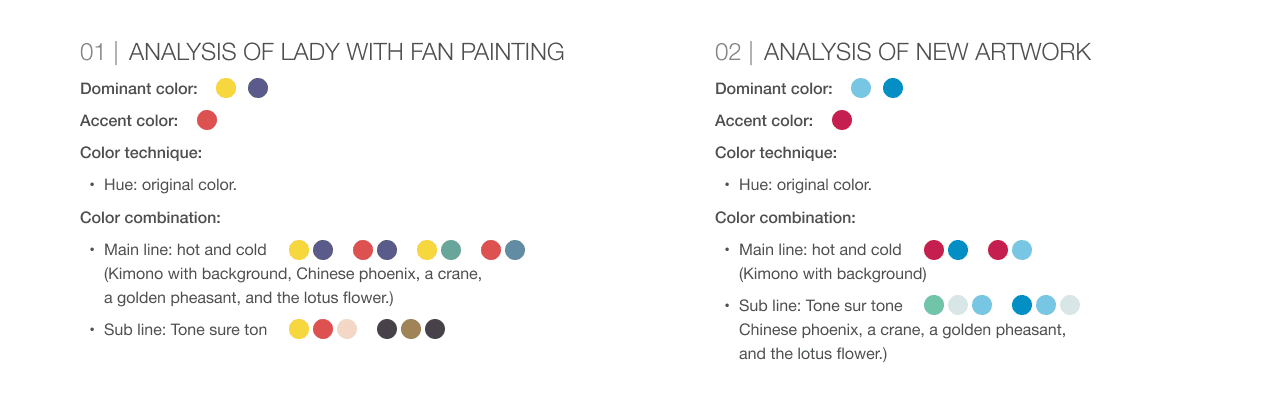
With both the color ratio and the composition understood, I developed a recolored version of the artwork.
Instead of copying the original palette, I reassigned color based on:
proportional balance
compositional hierarchy
visual contrast
the need to preserve readability and harmony within the piece
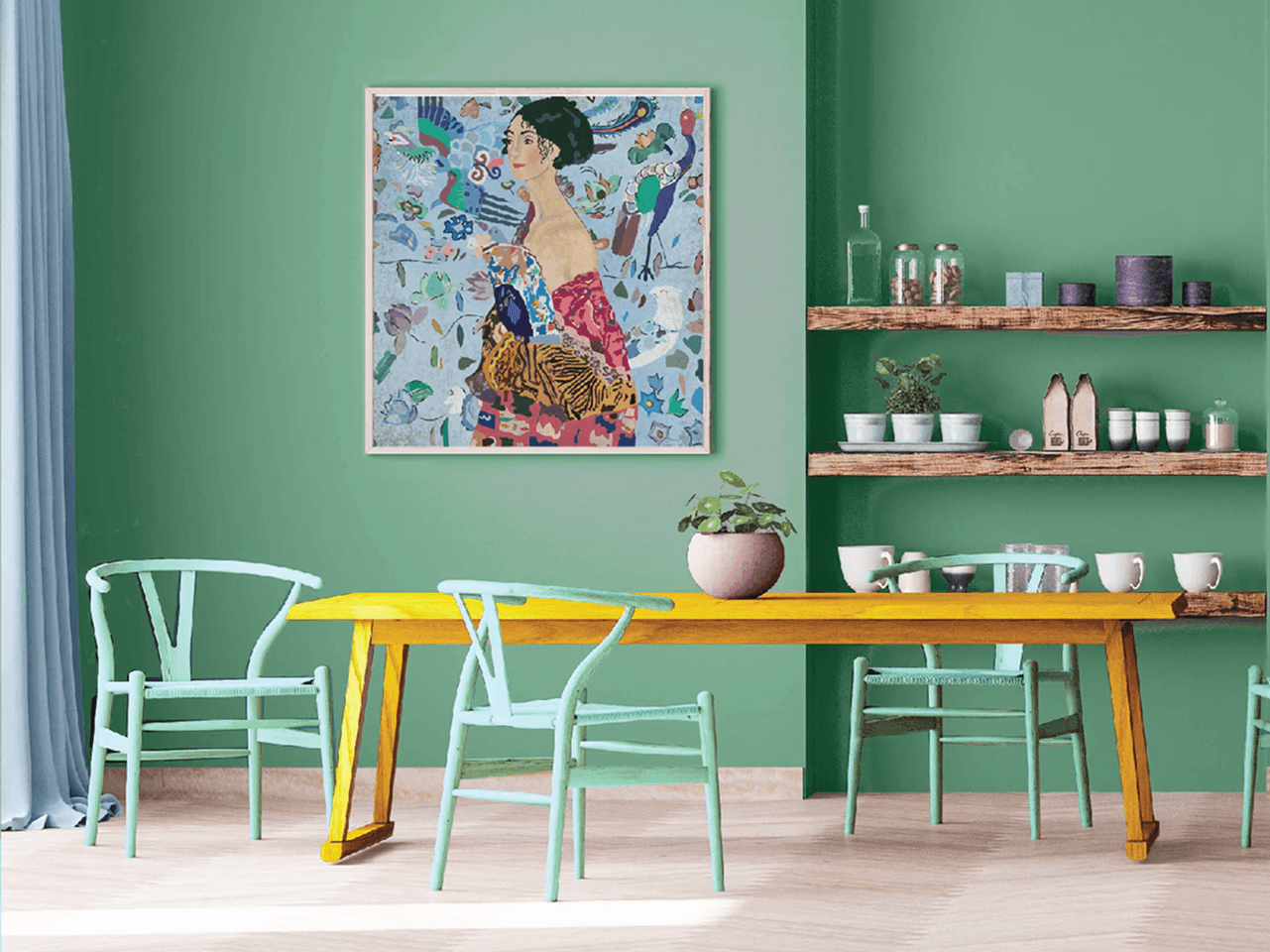
The result was a new version of the artwork that functioned as a clear learning tool: it showed how an existing composition could be reinterpreted through a different color logic.
The final piece served as a complete teaching sample for students in the course.
It demonstrated:
how to analyze a Pantone color ratio
how to break down an existing composition
how to apply a color system intentionally rather than intuitively
how color proportion can reshape the mood and reading of an image
More importantly, the project helped turn a theoretical lesson about color into a concrete visual method that students could study and apply in their own work.
What this project demonstrates
This project reflects my ability to combine analysis, execution, and teaching in one workflow.
It demonstrates that I can:
interpret color systems in a structured way
analyze composition beyond surface-level observation
translate theory into visual practice
create educational design material that is both clear and visually engaging